
Narratives and Imaginations of Infrastructures in Africa-China dynamics
Last updated: December 24, 2024
China’s presence in Africa has grown at an extraordinary pace since the launch of the Belt and Road Initiative (BRI) in 2013. This initiative aims to provide infrastructure development in participating countries, claiming to enhance regional connectivity and promote long-term economic growth. In Africa, Chinese enterprises have emerged as key players in infrastructure construction, capturing nearly 50% of the Engineering, Procurement, and Construction (EPC) market. Notable flagship projects include the African Union Conference Center, the Addis Ababa-Djibouti Railway, and the Mombasa-Nairobi Railway.
While current scholarship predominantly focuses on the geopolitical and economic dimensions of Africa-China relations, analyses of their cultural aspects remain limited. The mutual engagement between Africa and China is primarily driven by commerce, financial aid, and infrastructure development. However, these material interactions are also interpreted and imbued with meaning by individuals in both regions. In this sense, BRI projects are not just data points or reports; they are tangible, large-scale objects that exert agency and shape people’s imaginations and interactions.
Insights from critical infrastructure studies offer a fresh perspective on Africa-China relations by bringing a humanistic critique to the concept of infrastructure. This approach emphasizes the materiality of infrastructure and its entanglement with the political, societal, and cultural spheres, often referred to as the superstructure. The infrastructure projects of of the BRI influence not only macroeconomic dynamics but also serve as symbolic gestures. These projects represent a “promise” to Global South countries for a brighter and more prosperous future. At the same time, they profoundly impact daily life by reshaping familiar landscapes, altering lifestyles, and fostering curiosity and exchanges between Chinese and African people. Beyond serving as the foundation for economic development, the power of infrastructure also lies in its ability to evoke emotions, aspirations, and fantasies.
This starter kit includes a brief bibliography and a series of photo exhibitions tailored for those interested in exploring Africa-China relations through various perspectives, especially college students, and could serve as a foundational component of a preliminary course syllabus. It poses key questions: Beyond the headlines, how do these infrastructures assert agency and shape perspectives through their affordances? How are these infrastructures represented “otherwise”—not solely through a geopolitical lens but through cultural and grassroots interpretations that reveal diverse, layered meanings? The actors examined in this study include governments, corporations, journalists, filmmakers, and internet users, as well as an array of media formats such as official broadcasts, TV dramas, short videos, web novels, and podcasts. This diversity underscores the complexity of China’s infrastructure projects in Africa, highlighting how these construction initiatives offer opportunities and futuristic visions of development, yet also expose underlying risks, including extractivism, debt entrapment, and the specter of neo-colonialism.
The bibliography section is structured around three main categories. Rather than providing an exhaustive overview of Africa-China relations, my aim is to illuminate their multifaceted aspects. The first category establishes a conceptual framework, with a focus on critical infrastructure studies to explore the theoretical foundations surrounding infrastructures. The second category examines various approaches to inquiry. These include the traditional but essential geopolitical approach, which addresses the macro-level context; the mining and excavation approach, highlighting the frequent and often controversial Chinese mining activities in Africa; and approaches rooted in media studies, such as media infrastructure and platform studies. Additionally, this category incorporates a race and ethnicity approach, critically examining racial dynamics within Africa-China relations—an issue often denied by the Chinese government. The final category explores infrastructures through multiple genres, including travel writing, documentary, web novels, and podcasts. These case studies offer concrete insights into the cultural and media dimensions of this transnational relationship.
Framing:
Laying down the basic conceptual framework surrounding infrastructures, races, and (post) colonial power.
- Anand, Nikhil, et al., editors. The Promise of Infrastructure. Duke University Press, 2018.
- Liu, Alan. “Toward Critical Infrastructure Studies.“ Adapted version of paper last presented in full at University of Connecticut, Storrs, February 23, 2017.
- Star, Susan Leigh. “The Ethnography of Infrastructure.” American Behavioral Scientist, vol. 43, no. 3, Nov. 1999, pp. 377–91. DOI.org (Crossref), https://doi.org/10.1177/00027649921955326.
- Van Der Straeten, Jonas, and Ute Hasenöhrl. “Connecting the Empire: New Research Perspectives on Infrastructures and the Environment in the (Post)Colonial World.” NTM Zeitschrift Für Geschichte Der Wissenschaften, Technik Und Medizin, vol. 24, no. 4, Dec. 2016, pp. 355–91. DOI.org (Crossref), https://doi.org/10.1007/s00048-017-0162-y.
Geopolitical Approach:
Economic-sociological analysis on the “Belt and Road” Initiative (BRI) and Afro-China relationship.
- Benabdallah, Lina. Shaping the Future of Power: Knowledge Production and Network-Building in China-Africa Relations. University of Michigan Press, 2020.
- Brautigam, Deborah. The Dragon’s Gift: The Real Story of China in Africa. Oxford University Press, 2011.
- Frankopan, Peter. The New Silk Roads: The New Asia and the Remaking of the World Order. Vintage Books, 2020.
- Monson, Jamie. Africa’s Freedom Railway: How a Chinese Development Project Changed Lives and Livelihoods in Tanzania. Indiana University Press, 2011.
- Rogelja, Igor. Belt and Road: The First Decade. Agenda Publishing, 2022.
Mining and Excavation Approach:
- Chaponnière, Jean-Raphaël. “Chine-Afrique : Enjeux de l’ajustement Chinois Pour Les Pays Miniers:” Afrique Contemporaine, vol. n° 248, no. 4, June 2014, pp. 89–105. DOI.org (Crossref), https://doi.org/10.3917/afco.248.0089.
- Mezzadra, Sandro, and Brett Neilson. The Politics of Operations: Excavating Contemporary Capitalism. Duke University Press, 2019.
- Wang, Xiaoliang, et al. “Complementary Development between China and Sub-Sahara Africa: Examining China’s Mining Investment Strategies in Africa.” Sustainability, vol. 13, no. 21, Oct. 2021, p. 11678. DOI.org (Crossref), https://doi.org/10.3390/su132111678.
Media Infrastructure Approach:
- Avle, Seyram. “Hardware and Data in the Platform Era: Chinese Smartphones in Africa.” Media, Culture & Society, vol. 44, no. 8, Nov. 2022, pp. 1473–89. DOI.org (Crossref), https://doi.org/10.1177/01634437221128935.
- Batchelor, Kathryn, and Xiaoling Zhang, editors. China-Africa Relations: Building Images through Cultural Cooperation, Media Representation and Communication. Routledge, 2017. K10plus ISBN, https://doi.org/10.4324/9781315229096.
- Lewis, Angela. Chinese Television and Soft Power in Africa. Routledge, 2024. K10plus ISBN, https://doi.org/10.4324/9781003317166.
- Zhang, Xiaoling, et al., editors. China’s Media and Soft Power in Africa: Promotion and Perceptions. Palgrave Macmillan US, 2016.
Platform Studies Approach:
- Barnett, Tully. “Read in Browser: Reading Platforms, Frames,Interfaces, and Infrastructure.” Participations: Journal of Audience & Reception Studies, vol. 16, no. 1, May 2019, pp. 306–19.
- Jia, Lianrui, et al. “On Super Apps and App Stores: Digital Media Logics in China’s App Economy.” Media, Culture & Society, vol. 44, no. 8, Nov. 2022, pp. 1437–53. DOI.org (Crossref), https://doi.org/10.1177/01634437221128937.
- Plantin, Jean-Christophe, and Aswin Punathambekar. “Digital Media Infrastructures: Pipes, Platforms, and Politics.” Media, Culture & Society, vol. 41, no. 2, Mar. 2019, pp. 163–74. DOI.org (Crossref), https://doi.org/10.1177/0163443718818376.
- Yang, Guo Bin, and Wei Wang. Engaging Social Media in China: Platforms, Publics, and Production. Michigan State University press, 2021.
Race and Ethnicity Approach:
- Castillo, Roberto. “‘Race’ and ‘Racism’ in Contemporary Africa-China Relations Research: Approaches, Controversies and Reflections.” Inter-Asia Cultural Studies, vol. 21, no. 3, July 2020, pp. 310–36. DOI.org (Crossref), https://doi.org/10.1080/14649373.2020.1796343.
- Cheng, Yinghong. Discourses of Race and Rising China. Palgrave Macmillan US, 2019.
- —. “From Campus Racism to Cyber Racism: Discourse of Race and Chinese Nationalism.” The China Quarterly, vol. 207, Sept. 2011, pp. 561–79. DOI.org (Crossref), https://doi.org/10.1017/S0305741011000658
Infrastructures in Multiple Genres:
Travel Writing:
- Cheng, Ying. History, “Imperial Eyes and the ‘Mutual Gaze’: Narratives of African-Chinese Encounters in Recent Literary Works,” in Adejunmobi, Moradewun, and Carli Coetzee, editors. Routledge Handbook of African Literature. 1st ed., Routledge, 2019. DOI.org (Crossref), https://doi.org/10.4324/9781315229546
- Saro-Wiwa, Noo. Black Ghosts: A Journey into the Lives of Africans in China. Canongate Books, 2023.
Documentary:
- Cai, Yifan. “Popularizing Racial Discourse: The Visual and Verbal Representation of Africans in Chinese Social Media.” Asian Ethnicity, vol. 24, no. 3, 2023, pp. 369–389.
- Puppin, Giovanna. “Making Space for Emotions: Exploring China–Africa ‘Mediated Relationships’ through CCTV-9’s Documentary African Chronicles (Feizhou Jishi 非洲纪事).” Journal of African Cultural Studies, vol. 29, no. 1, Jan. 2017, pp. 131–47. DOI.org (Crossref), https://doi.org/10.1080/13696815.2016.1268952.
Webnovel:
- Ren, Xiang. “Mapping Globalised Chinese Webnovels: Genre Blending, Cultural Hybridity, and the Complexity of Transcultural Storytelling.” International Journal of Cultural Studies, vol. 27, no. 3, May 2024, pp. 368–86. DOI.org (Crossref), https://doi.org/10.1177/13678779231211918.
Podcast:
- Wang, Jing. “Small Apps for Digital Futures: Podcasting Ecology in Contemporary China.” Radio Journal:International Studies in Broadcast & Audio Media, vol. 21, no. 2, Dec. 2023, pp. 185–200. DOI.org (Crossref), https://doi.org/10.1386/rjao_00082_1.
- Zhao, Qingting, et al. “Building a Shared Future between China and Africa: A Framing Analysis of China Radio International’s Podcast News China Africa Talk.” Journalism (London, England), 2024, doi:10.1177/14648849241234179.
Gallery
Exhibition 1: BRI through the Lens of Official Reportage
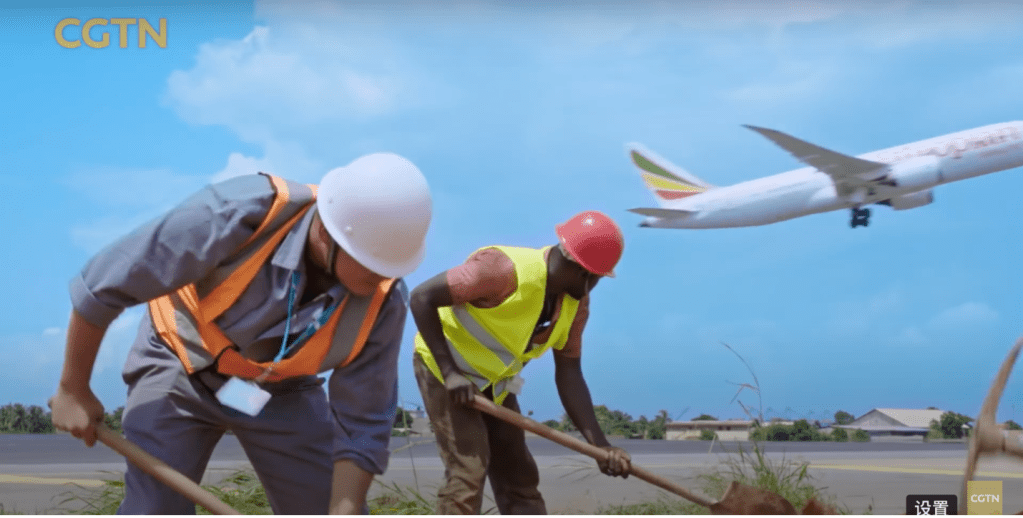
A screenshot from the promotional video aired at the opening ceremony of the Beijing Summit of FOCAC 2018. An African worker collaborating with a Chinese worker, with a plane taking off in the background. (Source: CGTN YouTube video)
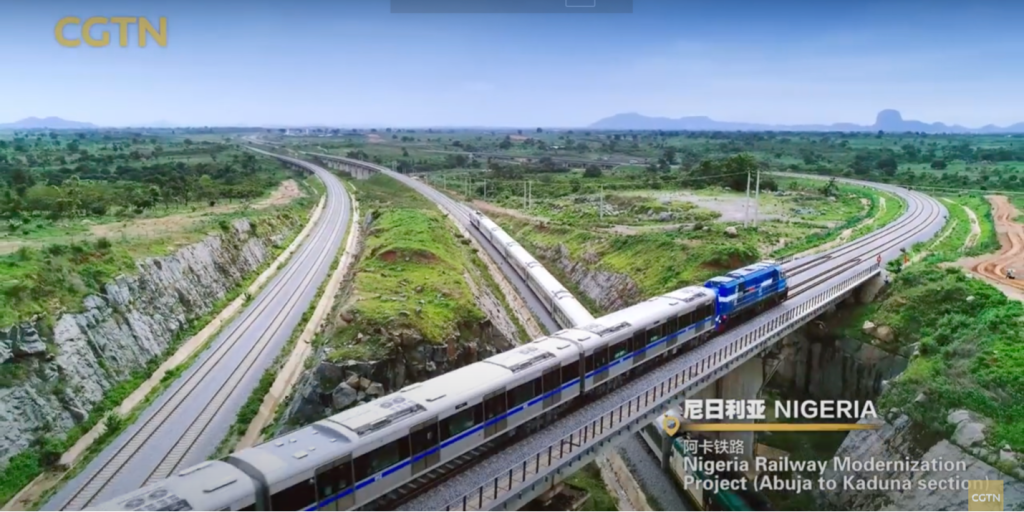
A still from the Nigeria Railway Modernization Project conducted by China. (Source: CGTN YouTube video)
Exhibition 2: Mobile Phones and Digital Connectivity
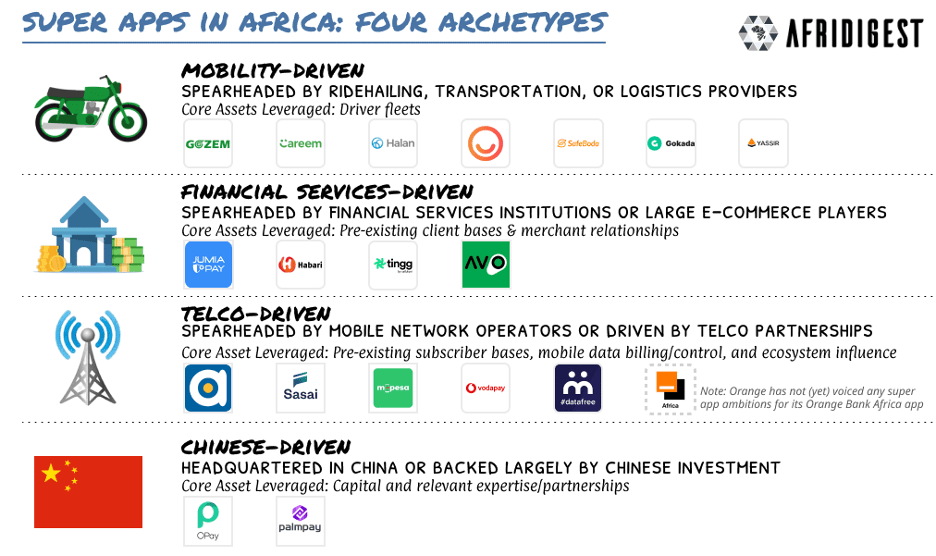
Four archetypes of super apps in Africa, one of which is identified as “Chinese-driven.” (Source: Afridigest)
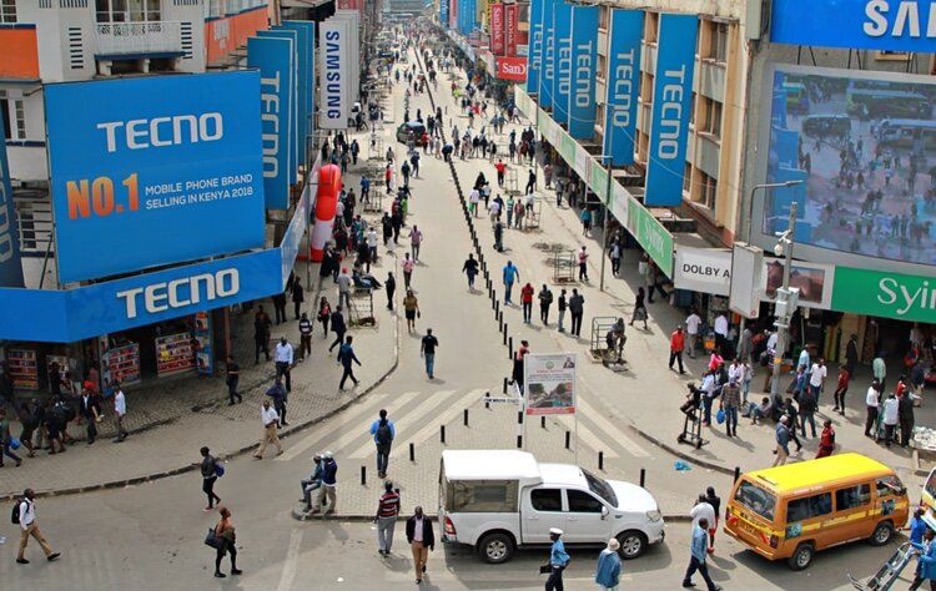
Lithuli Avenue in Kenya featuring prominent TECNO banners. TECNO is a Chinese mobile phone company holding the third-largest market share in Africa as of 2024. (Source: Hardware Things)
Exhibition 3: Satellite Installation and Expanding Imagination

A StarTimes satellite dish installed atop a rural village house in Kenya as part of the Chinese company’s “Thousand Villages” project to expand satellite access. (Source: BBC News)

A Chinese TV series (C-Drama) gaining popularity in Africa, shown playing in an African airport. (Source: Fenghuang Tech)
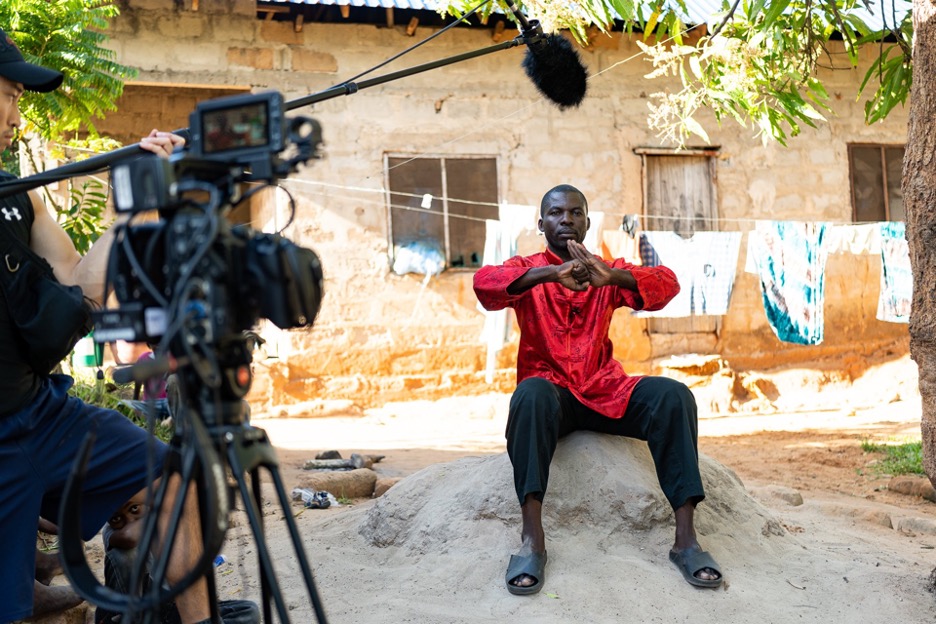
A shooting scene from the film Africa: A Kung Fu Story, featuring an African actor wearing traditional Chinese clothing and performing a Kung Fu gesture. (Source: Africa: A Kung Fu Story)
Exhibition 4: Video Platforms and African Vloggers

A photograph from an offline event organized by TikTok South Africa in September 2019. (Source: ByteDance Facebook)

A promotional still from TikTok’s “African All-Stars” series, which highlights African influencers and includes LGBTQ+ representation—an especially bold move considering the topic remains taboo in China. (Source: TikTok)
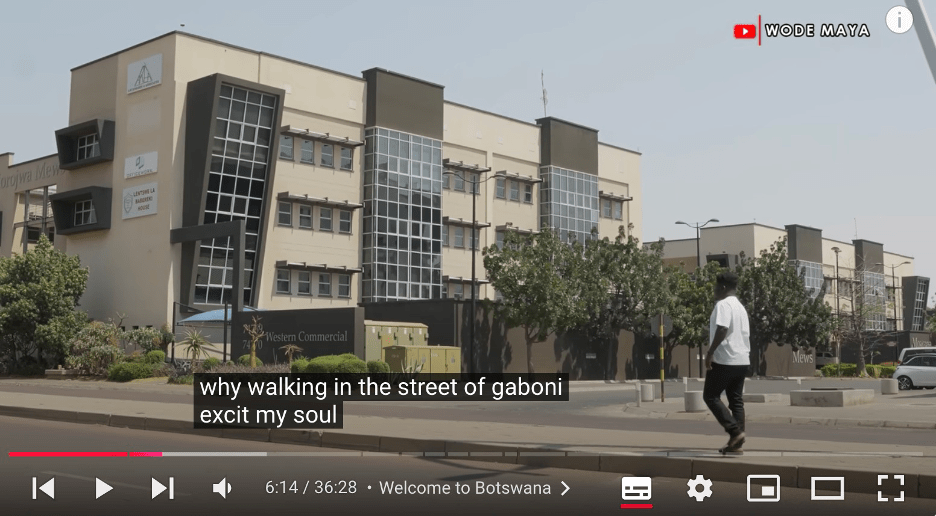
A screenshot from an African YouTuber, Wode Maya, showcasing Botswana’s infrastructure through their lens. (Source: Wode Maya)
Exhibition 5: Africa Narrated Through Chinese Podcasts
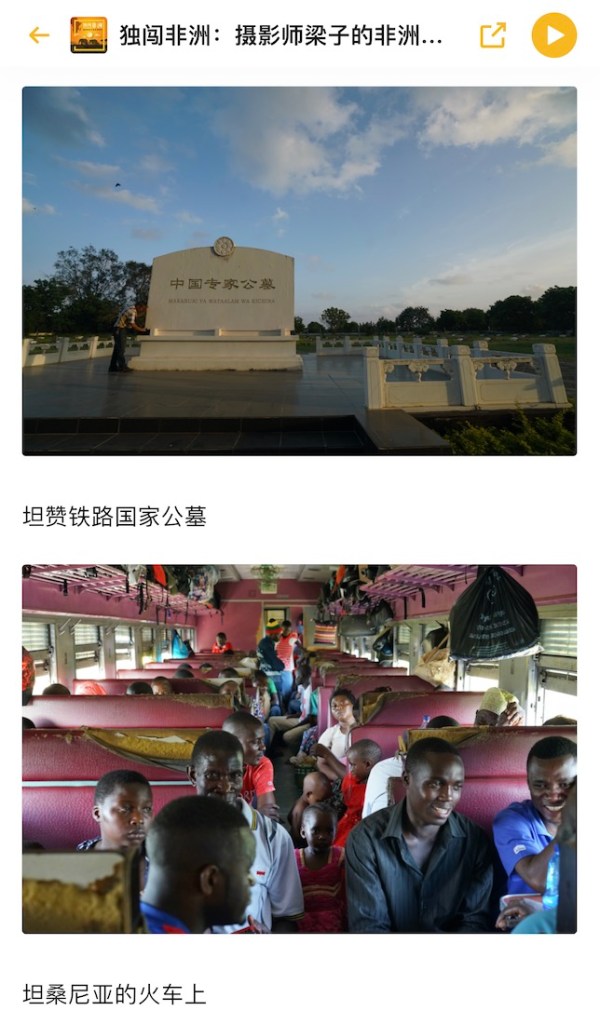
Photos featured in a podcast show note, honoring Chinese chemists who lost their lives during the construction of the TAZARA Railway, alongside an interior shot of a train on the same railway. (Source: Small Universe)
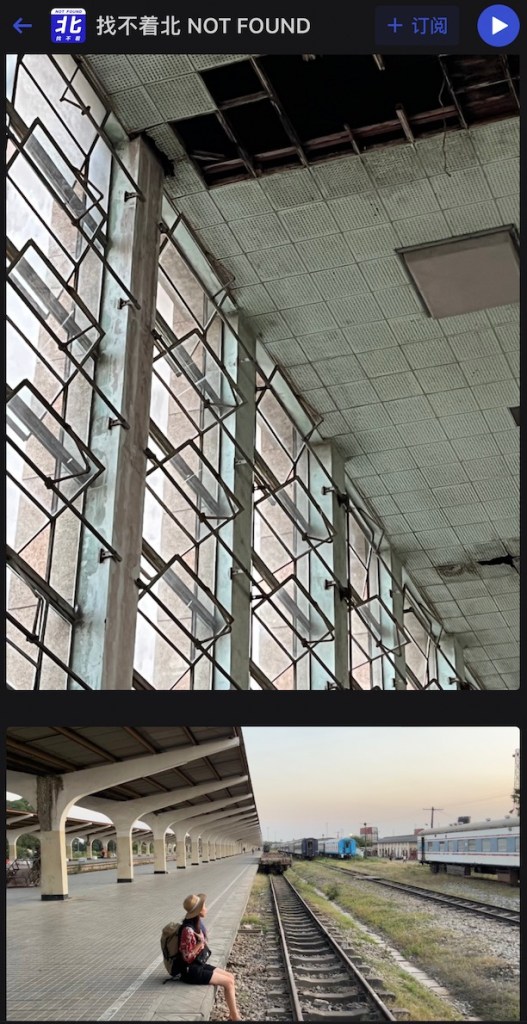
A podcast screenshot showing the broken ceiling of Dar Es Salaam station, with the speaker seated beside the railway tracks. (Source: Small Universe)
Exhibition 6: Africa Imagined in Chinese Web Novels

A Chinese web novel depicting fictional adventures in gold panning in Africa. The series, which has surpassed 2,800 chapters, remains ongoing. Part of it has been translated into English using machine translation. (Source: FanMTL)
Resources
- CA/AC Research Network: an independent, interdisciplinary, research network dedicated to China-Africa engagements.
- African Writing in Chinese Translation: a database of African literary works translated and published in Chinese, collected by Bruce Humes.
- China Global South Project: a non-profit independent multimedia organization dedicated to exploring every aspect of China’s engagement with the Global South.
 HOME | Mingyi Xiao